
ADS™ Dry Fog dust suppression technology can be applied to many dry bulk materials and industrial dust control applications. When properly engineered, dry fog can provide effective airborne dust control with lower installation, operating, and maintenance costs compared to traditional dust extraction systems.
Successful dry fog dust suppression requires four key design elements:
-
Dust containment
-
Adequate fog quantity
-
Proper retention time
-
Effective collection surfaces
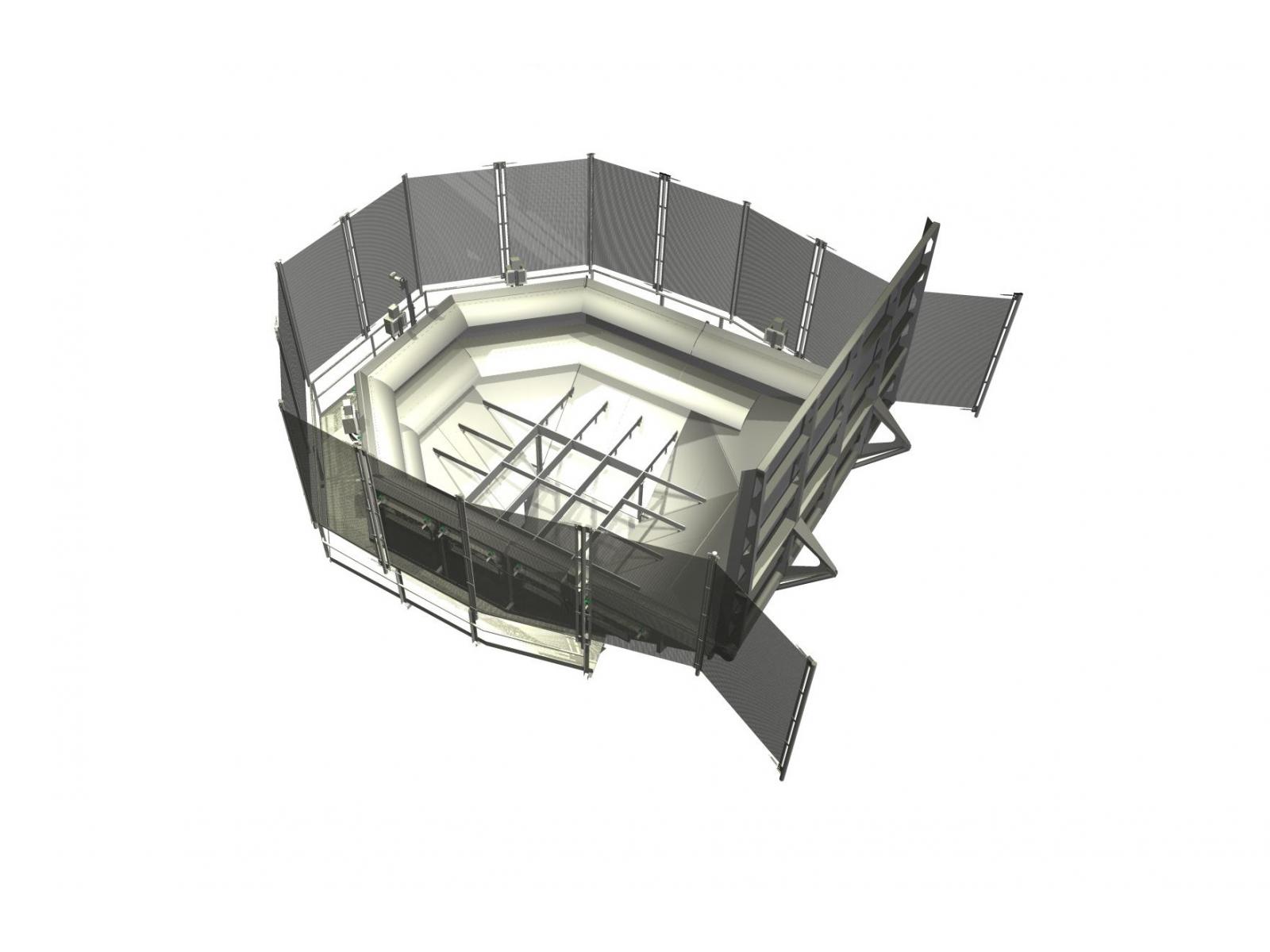
Of these elements, containment is the most critical. Discharge hoppers and port unloading hoppers are often exposed to wind gusts, crosswinds, and other outside influences that can reduce dust control performance. Wind fences help provide the passive containment needed to keep dust and dry fog within the controlled treatment zone.
By combining wind fence technology with TRC ADS™ Dry Fog systems, The Raring Corporation offers an integrated dust control solution that combines passive dust containment with active airborne dust capture. The wind fence reduces wind interference and helps maintain the fog and dust inside the treatment area, allowing enough retention time for microscopic fog droplets and dust particles to agglomerate and settle back onto the material stream.
This combination is especially effective for port unloading hoppers, where wind exposure and operational access make full enclosure difficult. TRC has successfully applied wind fence and ADS™ Dry Fog integration in ports, mining facilities, and bulk material handling operations worldwide.
Keywords: