
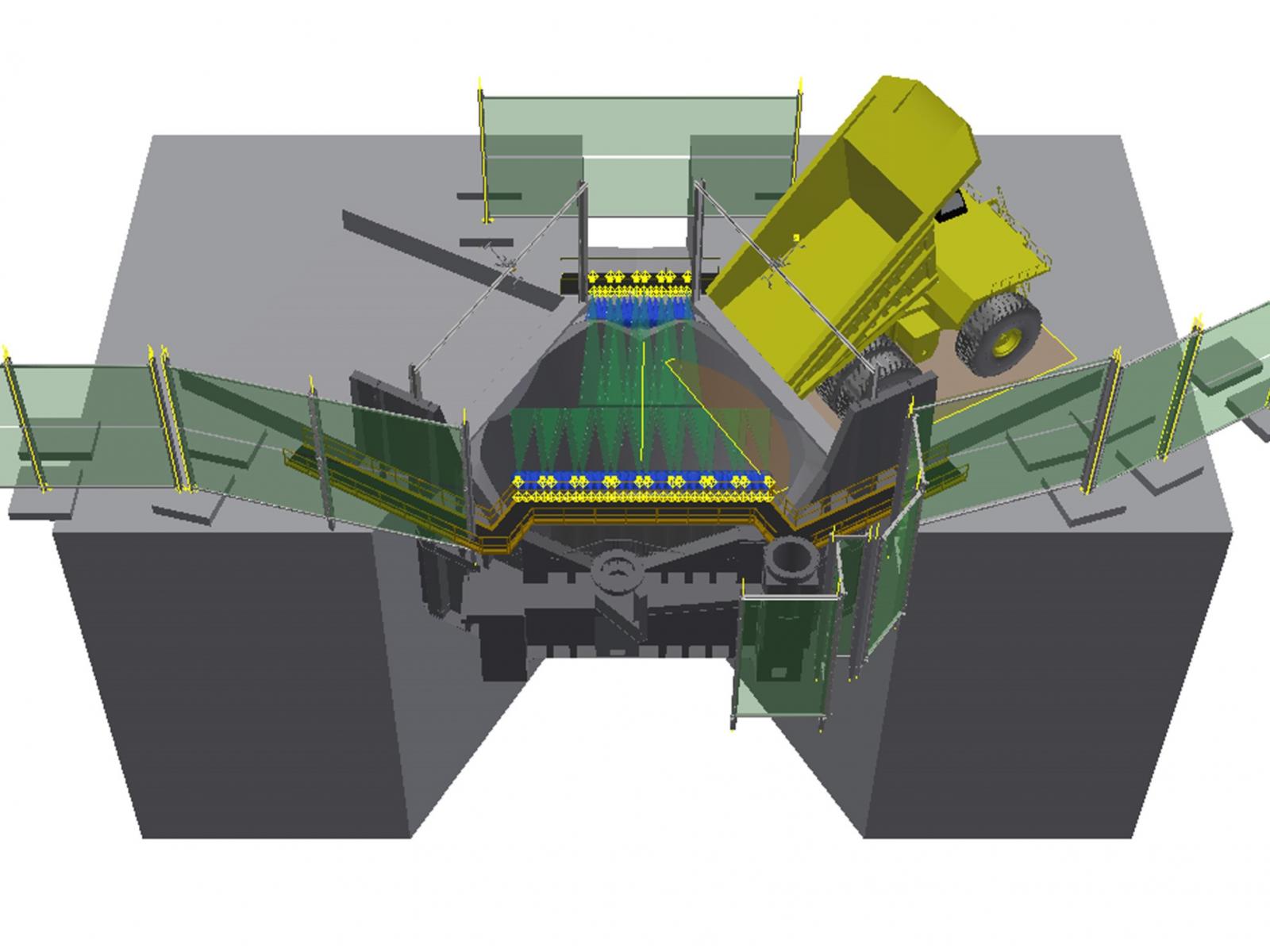
Wind fences, also known as windbreaks, wind shelters, shelter fences, or wind screens, are passive dust control systems designed to reduce wind speed, limit wind erosion, and help prevent airborne dust emissions.
In mining, ports, stockyards, power plants, and bulk material handling operations, wind can lift and transport dust from stockpiles, truck dumps, unloading hoppers, transfer points, and open material storage areas. By reducing wind velocity around these dust sources, a wind fence helps keep material in place, reduce product loss, improve environmental performance, and support safer working conditions.
A properly designed wind fence can significantly reduce incoming wind speed over both large and localized areas. This reduction helps minimize wind-blown dust, fugitive dust emissions, spray drift, and material erosion.
How a Wind Fence Works
A wind fence reduces wind speed by redirecting and dispersing airflow. Instead of allowing high-speed wind to pass directly across a dust-generating area, the fence creates a controlled low-wind zone on the downwind side of the structure.
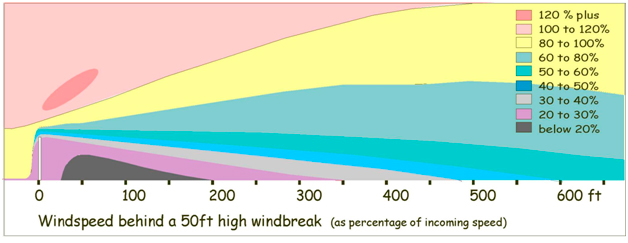
The protected zone depends on the height, porosity, length, location, and orientation of the wind fence. As a general design principle, a wind fence can create a zone of reduced wind velocity extending several times the fence height downwind. This lower wind-speed zone helps reduce dust pickup from exposed material surfaces and improves the performance of dust suppression systems.
Wind fences are especially effective when used around stockpiles, port unloading hoppers, truck dump pockets, rail unloading stations, conveyor transfer areas, and other open bulk material handling applications exposed to changing wind conditions.
When combined with ADS™ Dry Fog dust suppression systems, wind fences provide passive dust containment while dry fog provides active airborne dust capture. Together, these technologies help improve dust control performance by keeping fog and dust within the treatment zone long enough for effective agglomeration and settlement.
How Wind Fences Reduce Turbulence and Control Dust
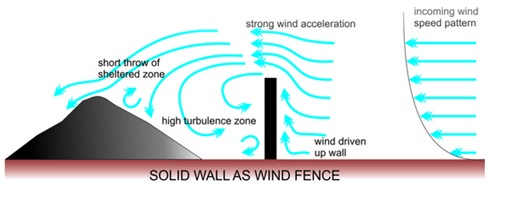
Wind behaves much like a river flowing over the surface of the earth. As wind moves across the ground, buildings, stockpiles, equipment, and open material areas, it creates turbulence. The higher the wind speed, the greater the turbulence and the greater the potential for wind-blown dust, material erosion, and fugitive dust emissions.
A simple windbreak works by blocking and redirecting the wind. This creates a sheltered area immediately behind the barrier. However, if the barrier is solid, the wind is forced over and around it, often creating strong turbulence and a downward air movement just beyond the protected zone.
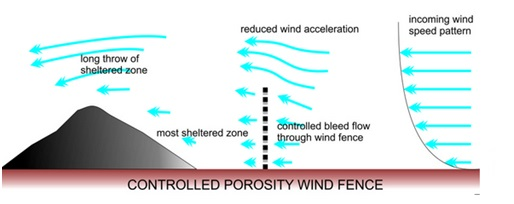
A properly designed wind fence reduces this problem by allowing a controlled amount of air to pass through the structure. This porous design slows the wind, reduces turbulence, and prevents the faster deflected airflow from crashing down too aggressively behind the fence.
By allowing the airflow to merge more gradually, wind fences create a larger and more stable low-wind zone downwind of the structure. This reduced-wind area helps control wind-blown dust from stockpiles, truck dumps, unloading hoppers, conveyor transfer points, rail unloading stations, and other bulk material handling areas.
In dust control applications, wind fences provide passive dust containment by reducing wind velocity and limiting dust dispersion. When combined with ADS™ Dry Fog dust suppression systems, wind fences help keep fog and airborne dust inside the treatment zone long enough to improve agglomeration, dust capture, and overall system performance.
Wind Fence Systems for Industrial Dust Control
Well-designed wind fence systems can significantly reduce fugitive dust emissions from stockpiles, storage yards, truck dumps, unloading hoppers, rail unloading stations, and other open bulk material handling areas.
Wind erosion is strongly affected by wind speed. Because erosion increases with the cube of wind velocity, even a moderate reduction in wind speed can produce a major reduction in airborne dust and material loss. In many applications, a properly engineered windbreak can reduce fugitive dust to a fraction of the emissions generated in an unprotected area.
For example, a stockpile losing one ton of dust per month under unprotected wind conditions could potentially reduce dust loss to less than 250 lb / 113 kg per month with an effective wind fence system.
Industrial windbreaks and wind fences are commonly used for:
-
Fugitive dust control
-
Stockpile dust control
-
Wind erosion reduction
-
Reduction of wind loads on sensitive equipment
-
Privacy screening
-
Debris and garbage containment
-
Wave and turbulence control on ponds
-
Snow deflection and snow control
-
Industrial fencing and site protection