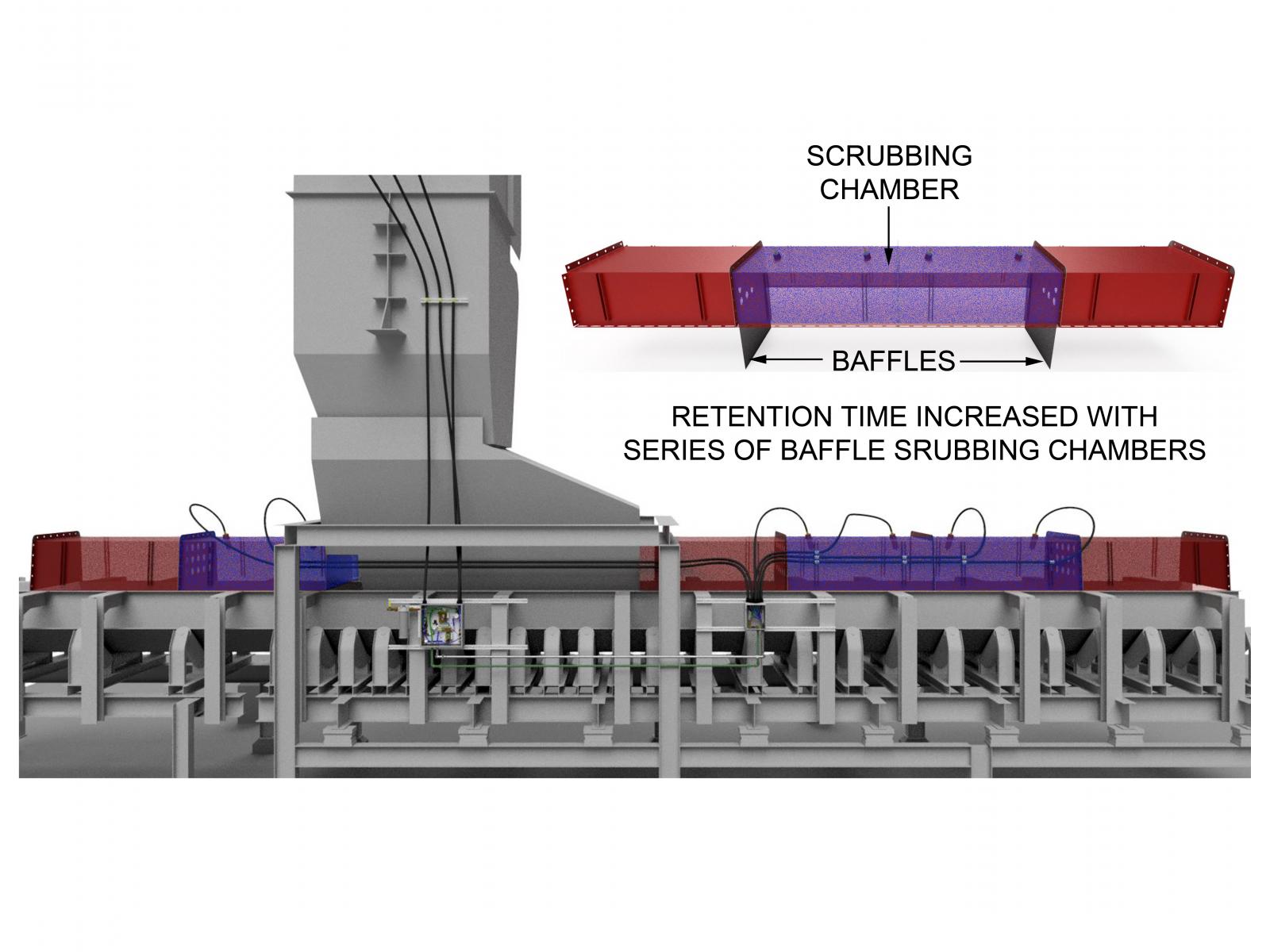
Retention time is a critical design factor in ADS™ Dry Fog dust suppression systems. The agglomeration process requires enough time for airborne dust particles to collide with microscopic water droplets multiple times. These repeated collisions allow the dust and fog droplets to combine, grow larger, become heavier, and either settle back onto the material stream or attach to a collection surface.
Because particle collision is based on probability over time, the dust containment area must be properly sized to provide adequate retention time. If the enclosure is too small, the fog and dust may not remain together long enough for effective agglomeration and airborne dust capture.
For this reason, enclosures used with dry fog dust control systems are typically larger than conventional conveyor enclosures used only for dust extraction or material containment. Larger transfer point enclosures, sealed chutes, stilling sheds, and containment structures help keep the dust and dry fog in the controlled zone long enough to improve dust suppression performance.
Proper retention time supports more effective airborne dust control in mining, mineral processing, coal handling, conveyor transfer points, crushers, screens, bins, hoppers, and bulk material handling applications.