ADS™ Dry Fog Dust Suppression Systems
The Raring Corporation designs and manufactures patented ADS™ Dry Fog Dust Suppression Systems for controlling airborne dust in mining, mineral processing, coal handling, and bulk material handling operations.
ADS™ systems capture respirable dust and fine particulate matter directly at the source. The technology uses very small quantities of water, requires no chemical additives, and typically increases the moisture content of the handled material by only a few hundredths of one percent.
This makes ADS™ Dry Fog an effective dust-control solution for operations where excessive water can create material-handling problems, reduce product quality, cause conveyor belt slippage, increase cleanup requirements, or contribute to freezing and plugging.
How Does an ADS™ Dry Fog Dust Suppression System Work?
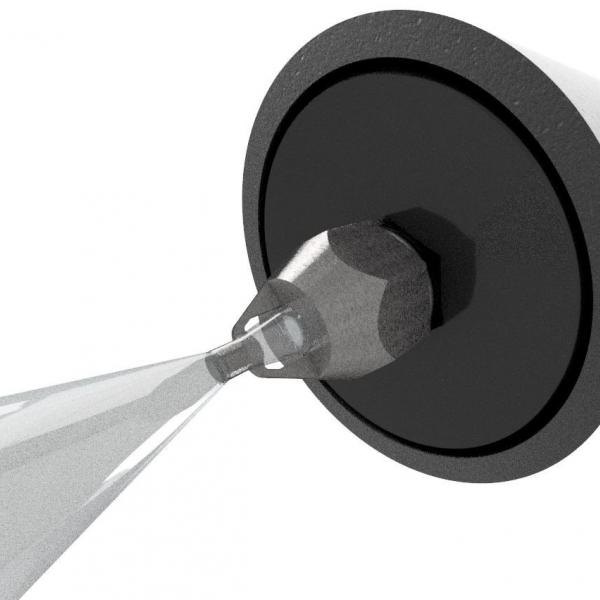
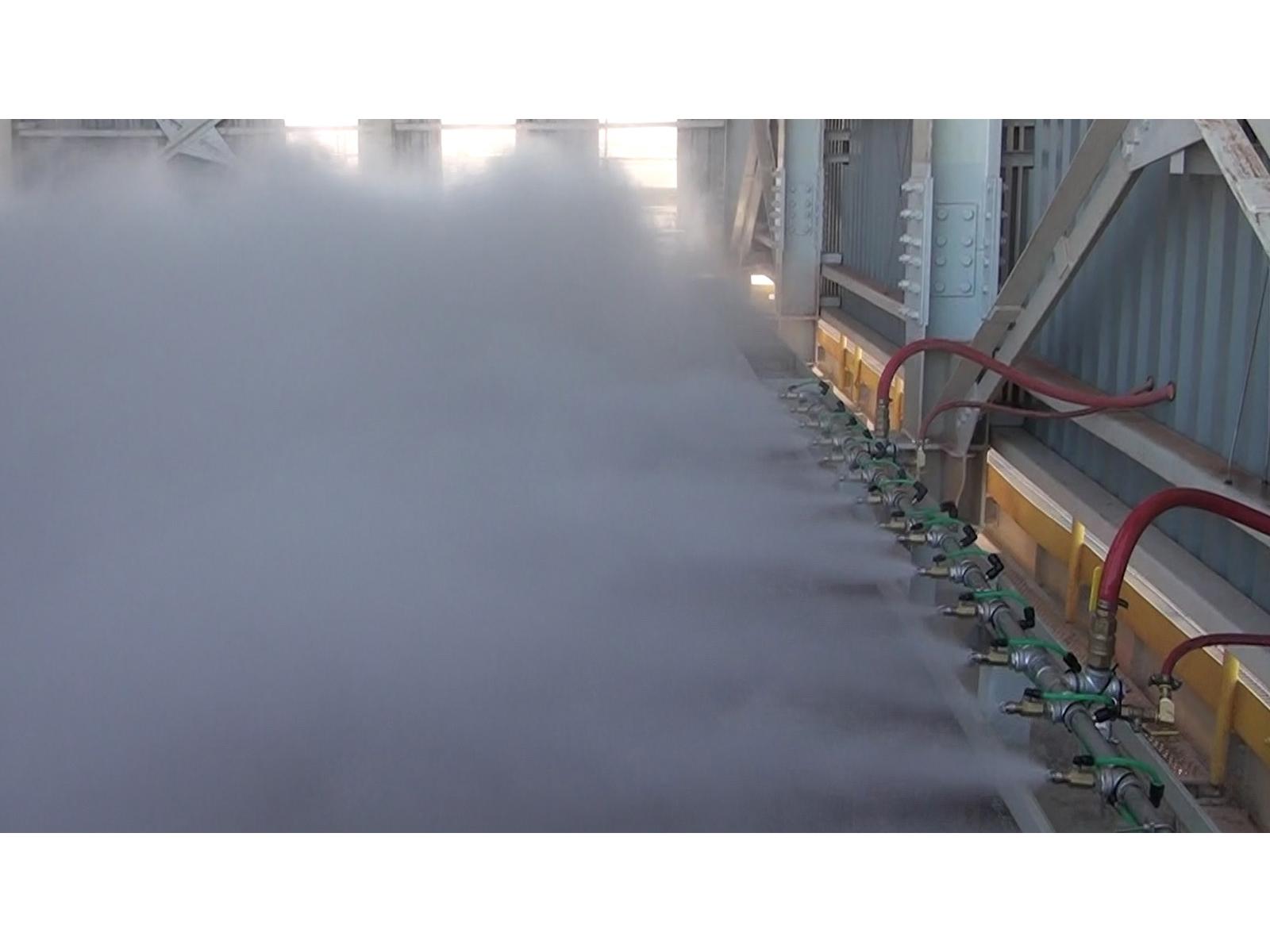
ADS™ Dry Fog systems use proprietary FP Series acoustic nozzles to generate a dense cloud of microscopic water droplets. These droplets are similar in size to airborne respirable dust particles, allowing the fog and dust to interact effectively.
The FP Series acoustic nozzles combine compressed air and water to create high-frequency sound waves. These sound waves atomize the water into extremely fine fog droplets while maintaining enough kinetic energy to:
-
Project the fog into the dust-generation area
-
Penetrate opposing air currents
-
Distribute fog throughout the containment zone
-
Keep droplets suspended long enough to contact airborne dust
When the dry fog droplets collide with dust particles of a similar size, the particles combine through a process known as agglomeration. The resulting particles become larger and heavier, causing them to settle back onto the material stream instead of escaping into the surrounding work environment.
What Is Dry Fog Dust Suppression?
Dry fog dust suppression is a low-moisture method of controlling airborne dust. Unlike conventional water sprays, dry fog systems produce microscopic droplets that interact with fine dust without significantly wetting the material.
Because ADS™ Dry Fog uses minimal water, it is especially suitable for:
-
Coal mines and coal-handling facilities
-
Crushing and screening plants
-
Conveyor transfer points
-
Railcar and truck loading or unloading stations
-
Hoppers and feeders
-
Stockpile reclaim areas
-
Mineral-processing facilities
-
Ports and bulk-material terminals
The Science Behind ADS™ Dry Fog Technology
ADS™ dust-control technology uses the natural principles of agglomeration and nucleation.
Agglomeration
Agglomeration occurs when airborne dust particles collide with dry fog droplets of a similar size. The particles combine into larger, heavier masses that can no longer remain suspended in the air.
Nucleation
Nucleation occurs when very small or submicron dust particles act as condensation points in a supersaturated atmosphere. Water vapor condenses around the particles, increasing their size and weight so they can settle out of the air.
These processes are similar to the natural mechanisms used by clouds and atmospheric moisture to remove fine particles from the air.
Why Is Dust Containment Important?
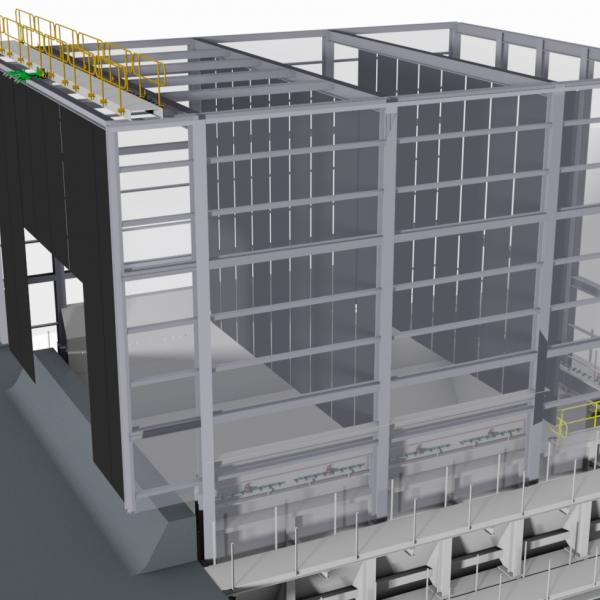
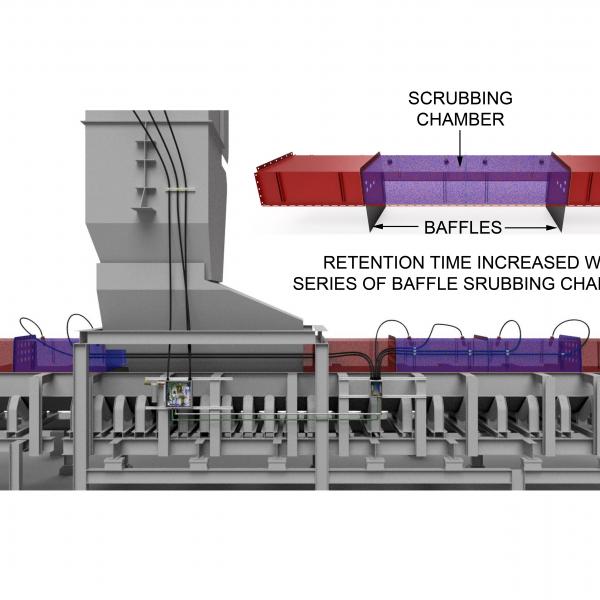
Effective dry fog dust suppression requires more than producing fine water droplets. The dust and fog must remain together within a properly designed containment area long enough for particle capture to occur.
The Raring Corporation engineers containment systems around the dust source to manage airflow, retain the fog cloud, and provide sufficient contact time between the dust and microscopic droplets.
Within the containment area:
-
Acoustic nozzles generate the dry fog cloud
-
Airborne dust is confined near its source
-
Fog droplets interact with respirable dust particles
-
Agglomeration and nucleation increase particle size and weight
-
Captured dust settles back onto the material stream
The atomization process also creates natural electrostatic effects that can increase interaction between fog droplets and dust particles.
Benefits of ADS™ Dry Fog Dust Control
ADS™ Dry Fog Dust Suppression Systems provide several operational and environmental advantages:
-
Controls airborne respirable dust at the source
-
Uses substantially less water than conventional spray systems
-
Requires no chemical dust suppressants
-
Adds minimal moisture to coal, ore, and other bulk materials
-
Helps reduce fugitive dust emissions
-
Minimizes wet material buildup and housekeeping requirements
-
Reduces the risk of material plugging, freezing, or conveyor slippage
-
Can be integrated into new or existing material-handling systems
-
Supports cleaner and safer working environments
Dry Fog Dust Suppression for Mining and Bulk Material Handling
ADS™ technology can be engineered for both new installations and retrofits. Each system is designed around the material characteristics, dust particle size, equipment arrangement, airflow conditions, climate, and operating requirements of the application.
The Raring Corporation provides dry fog dust-control solutions for mining companies, coal-processing facilities, engineering firms, EPC contractors, ports, terminals, and industrial bulk-material operators worldwide.